
Indian companies, including NBFCs, filed proposals to raise $7.696 billion through external commercial borrowings (ECBs) and foreign currency convertible bonds (FCCBs) in July 2026, a significant increase from $6.09 billion in June.
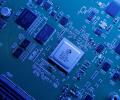
The Hyderabad AI factory is being designed to run some of the world's largest and most sophisticated AI models, including trillion-parameter models and next-generation agentic AI applications.

Prime Minister Narendra Modi has introduced a 'Sapta Dhara' (seven-stream) reform framework, aiming to propel India into a developed nation by 2047. This comprehensive plan focuses on key sectors including manufacturing, agro-food processing, technology, logistics, defence, green and blue economy, and soft power, leveraging the nation's youth potential.

Morgan Stanley analysts, led by Ridham Desai, predict that the next phase of the Indian market rally will be primarily driven by the April-June quarter (Q1FY27) corporate earnings season and the performance of the monsoon.

Indian benchmark equity indices, Sensex and Nifty, closed lower for multiple consecutive days, with the Nifty extending its losses to a seventh day, primarily due to elevated crude oil prices following the expiry of the US-Iran ceasefire without a diplomatic resolution.

High-level peace talks between the US and Iran, facilitated by Pakistan, aim to de-escalate the conflict in West Asia and potentially reshape regional stability.
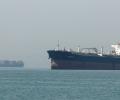
A high-stakes memorandum for a 60-day ceasefire between the United States and Iran is in its final stages, with negotiators working to close remaining gaps and avert further escalation in the region, including reopening of the Strait of Hormuz and the resumption of Iranian oil sales, according to an Axios report citing US officials.

India's electric two-wheeler market has seen record penetration, exceeding 11.2 per cent, driven by crude oil price fluctuations. This surge has led to an unexpected crisis for Indian OEMs, with unfulfilled customer demand reaching 20-30 per cent and average waiting periods exceeding four weeks, a situation expected to intensify during the upcoming festival season.

In his first major national address since hostilities began, Trump said the ongoing military campaign, dubbed 'Operation Epic Fury', has delivered 'swift, decisive, overwhelming victories'.

Indian benchmark indices Sensex and Nifty traded lower amid volatile trends, influenced by escalating geopolitical uncertainties in West Asia and fresh outflows from Foreign Institutional Investors (FIIs).
Indian equities on Dalal Street saw volatility as global market trends and oil price hike impacted investor sentiment. Track Sensex, Nifty50 movement and key market drivers for Apr 23, 2026.

Global oil prices fell on Thursday to their lowest levels since before the outbreak of the Iran conflict, offering a significant economic tailwind for India, the world's third-largest crude importer, by easing inflation risks, reducing the import bill and improving the government's fiscal position.

Google aims to complete the first phase of its 1 gigawatt artificial intelligence (AI) data centre hub in Visakhapatnam by late 2028, with full operations across all phases expected within five years, according to Alexander Smith, Principal of Global Infrastructure and Energy for Asia Pacific at Google.

Indian benchmark indices, Sensex and Nifty, recovered intraday losses to close higher, driven by late-day buying and a significant decline in Brent crude oil prices, which fell 3 per cent to USD 89.32 per barrel.

The Natanz nuclear facility is one of Iran's key nuclear installations and has previously been at the centre of international concerns over Tehran's nuclear programme.

US President Donald Trump is expected to sign the Lindsey O. Graham Sanctioning Russia and Iran Act of 2026 later on Friday (local time). A White House official confirmed the development to ANI without revealing further details.

India possesses two months of fuel stockpiles and faces no supply concerns despite global energy disruptions, according to Oil Minister Hardeep Singh Puri. However, state-run fuel retailers are incurring losses of up to Rs 1 lakh crore in a single quarter due to elevated crude prices and unchanged retail fuel prices, raising questions about the sustainability of these losses.

India will maintain multiple sources for crude oil purchases and diversify them to ensure stability in the supply chain with national interests remaining the "guiding factor" for the procurement, Foreign Secretary Vikram Misri said.

Elevated global crude oil and natural gas prices, driven by geopolitical developments in West Asia, could significantly influence the Government of India's fiscal position for 2026-27, according to a report by ratings agency Icra.

India has condemned the escalating attacks on commercial shipping in West Asia, particularly after a Thai-flagged vessel en route to India's Kandla Port was targeted in the Strait of Hormuz. The attacks have disrupted global oil and gas supplies, impacting India's energy imports.

According to the Pentagon, the vessels were targeted as part of efforts to prevent the deployment of naval mines in the strategically vital passage through which a significant portion of global crude oil shipments transits.

The National Stock Exchange (NSE) will launch Dated Brent Crude Oil (Platts) futures on April 13, offering a new hedging tool for market participants.

'India is vulnerable to the West Asia crisis in three ways: Energy costs, the business Indian companies conduct in the region, and remittances from the Indian diaspora.'

Indian equities on Dalal Street saw volatility as global market trends and fresh tariff concerns linked to Donald Trump impacted investor sentiment. Track Sensex, Nifty50 movement and key market drivers for April 9, 2026.

Indian benchmark stock indices, Sensex and Nifty, extended their winning streak for a third consecutive day, driven by positive global market trends and a significant softening of crude oil prices following a peace deal between the US and Iran.

Mahindra & Mahindra (M&M) is implementing a comprehensive, multi-layered strategy to fortify its supply chains against geopolitical volatility, logistical challenges, and regulatory risks, drawing lessons from recent global disruptions.

Russian President Vladimir Putin has proposed a new investment platform, based on the New Development Bank (NDB), to fund projects in trade, infrastructure, logistics, and technology across BRICS nations, emphasising that the grouping's expanding economic cooperation is not 'against anyone' but aims to advance members' national interests.

'As re-industrialisation gathers pace across regions like Asia, Europe and the US, a wide range of products and inputs will see demand.'

There are only bad and worse options before him, points out Aakar Patel.

Union Finance Minister Nirmala Sitharaman expressed strong confidence in India achieving over 10 per cent economic growth, advocating for increased technology adoption and innovation. She urged overcoming scepticism and highlighted technology's transformative role in agriculture and public sector reforms, while also launching a new fund and book at an IIT Madras event.
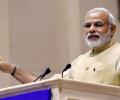
Prime Minister Narendra Modi, in his Independence Day address, highlighted technology and innovation as central to India's goal of becoming a developed nation by 2047. He called for India to lead in emerging technologies like AI, quantum computing, and space, announcing a massive AI skilling initiative for one crore youth. Modi stressed the importance of becoming a global innovation hub, bolstering energy security with nuclear power, and strengthening cybersecurity.

Indian benchmark indices Sensex and Nifty climbed in early trade, driven by a significant drop in crude oil prices following reports of a potential 60-day ceasefire extension between the US and Iran, coupled with positive global market trends and buying in IT stocks.

The government will lift restrictions on the sale of petrol and diesel to commercial and industrial consumers from July 1, easing emergency measures imposed to manage fuel supplies.

'Improved law and order and transparent governance have helped change UP's investment image.'

Xi brought in asymmetrical power play by stating that India should have 'strategic cognition' and 'strategic judgement made on the basis of the stage of development the two countries are at'. This is a very nuanced way of asserting China's coercive diplomatic posture and reflects Beijing's penchant to unleash border instability at will, restrict rare earth metal exports, exert pressure on India at global and regional orders, asserts China expert Srikanth Kondapalli.

India significantly increased its crude oil imports from Russia and the United Arab Emirates in June, securing supplies as the Strait of Hormuz began to reopen, with Russian barrels remaining attractive due to discounts and UAE supplies offsetting earlier uncertainties.

S&P Global Ratings warns that a sustained rise in crude oil prices to $130 per barrel could significantly slow India's economic growth, weaken fiscal metrics, and strain corporate and banking sector performance, potentially reducing growth by up to 80 basis points.
India is significantly expanding its crude oil sourcing to Latin America, with Venezuela emerging as a major supplier, as geopolitical disruptions in the Middle East and the Strait of Hormuz compel the world's third-largest oil consumer to diversify its energy supplies.

Direct talks between the US and Iran, mediated by Pakistan, have failed to produce an agreement after 21 hours of negotiations, with disagreements over Iran's nuclear ambitions and sanctions proving insurmountable.

Prime Minister Narendra Modi urged Russian President Vladimir Putin to move from 'endless war to the end of war' in Ukraine, emphasising that a peaceful resolution is humanity's shared priority.
